
Buying and installing a concrete batching plant is a major investment for construction companies, infrastructure contractors, ready-mix concrete producers, and developers. For first-time buyers, the installation process can seem complex because it involves site preparation, foundation work, equipment assembly, electrical connections, material handling, testing, and operator training. Choosing experienced Atlas concrete batching plant manufacturers can make the installation process more organized and reduce avoidable problems. However, buyers should understand the complete installation process before finalizing their equipment and supplier.
A successful Concrete Batching Plant Installation depends on several factors, including the selected plant capacity, site conditions, foundation design, equipment configuration, material storage, power supply, water availability, transportation access, and commissioning requirements. Buyers should also understand that the concrete batching plant price is only one part of the overall investment. Transportation, foundation work, installation, electrical systems, labor, and supporting equipment may also contribute to the total project cost. This guide explains the major stages of concrete batching plant installation and the important factors first-time buyers should consider before starting the project.
What Does Concrete Batching Plant Installation Involve?
For first-time buyers, Concrete Batching Plant Installation generally involves these key stages:
- Selecting and inspecting the installation site
- Preparing the ground and foundation
- Planning access for equipment and vehicles
- Transporting plant components to the site
- Installing silos, bins, conveyors, mixers, and other equipment
- Connecting electrical and control systems
- Setting up water and admixture systems
- Inspecting safety and operational components
- Conducting trial batching and commissioning
- Training operators and establishing maintenance procedures
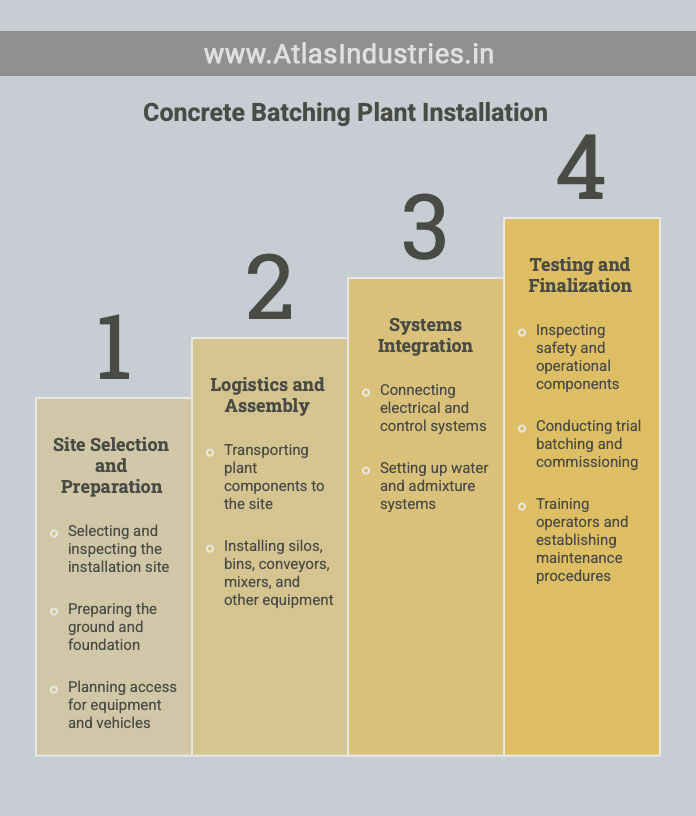
The exact installation process depends on the plant type, capacity, configuration, site conditions, and manufacturer’s technical specifications.
1. Select the Right Installation Site
Site selection should be completed before equipment reaches the construction location. A suitable site should provide enough space for the batching plant, aggregate storage, cement storage, vehicle movement, maintenance activities, and safe access.
Consider the following factors:
- Available land area
- Ground stability
- Accessibility for trucks
- Distance from construction operations
- Power availability
- Water supply
- Drainage
- Aggregate storage requirements
- Cement silo positioning
- Maintenance access
The site should also allow concrete delivery vehicles to enter and leave efficiently. Poor site planning can cause traffic congestion, material handling difficulties, and unnecessary operational delays.
2. Understand the Plant Configuration
Before installation begins, buyers should understand exactly what equipment is included in their plant. A typical portable concrete batching plant may include aggregate bins, weighing systems, conveyors, cement silos, screw conveyors, a mixer, water systems, admixture systems, control panels, and other supporting components.
The configuration depends on production capacity and application. Some buyers also search for a cement batching plant, although cement is generally one component of a complete concrete batching system. Understanding the technical terminology can help buyers communicate more effectively with suppliers and avoid selecting equipment that does not match their requirements.
3. Prepare the Foundation
Foundation preparation is one of the most important stages of installation. The foundation must be designed according to the plant’s specifications, equipment weight, loading conditions, soil characteristics, and local engineering requirements. Before construction begins, buyers should coordinate with qualified civil and structural professionals and follow the manufacturer’s foundation drawings.
The foundation may support components such as:
- Aggregate bins
- Mixer structure
- Cement silos
- Conveyor systems
- Control structures
- Other plant equipment
A properly prepared foundation helps maintain equipment alignment and structural stability during operation.
4. Plan Transportation and Material Handling
Large batching plant components need to be transported safely to the installation site.
Before delivery, confirm:
- Road accessibility
- Truck entry and exit routes
- Unloading areas
- Crane requirements
- Component storage areas
- Installation sequence
The site should be prepared before equipment arrives. If components cannot be unloaded efficiently, installation may be delayed. First-time buyers should also clarify which transportation, unloading, lifting, and installation activities are included in the supplier’s quotation.
5. Install the Main Plant Components
Once the foundation and site are ready, installation can begin according to the manufacturer’s assembly sequence. Major components may include aggregate bins, weighing systems, conveyors, mixer units, cement silos, screw conveyors, water systems, admixture systems, and control cabins.
The installation team needs to ensure that components are correctly positioned and aligned. Mechanical connections, structural supports, fasteners, access platforms, and safety systems should be checked throughout the assembly process. Following the manufacturer’s installation instructions is essential because incorrect assembly can affect plant performance and safety.
6. Install Cement Silos and Material Systems
Cement storage is an important part of batching plant operation. Cement silos need appropriate foundations and must be installed according to engineering specifications. The cement handling system may include screw conveyors, filters, valves, weighing equipment, and other components.
The aggregate system also needs to be configured according to the required mix designs. Aggregate bins should provide sufficient storage and efficient feeding into the batching process. Correct installation of these systems helps maintain accurate material flow and reduces production interruptions.
7. Connect Electrical and Control Systems
Modern batching plants use electrical and automated control systems to manage material weighing, batching, mixing, and production monitoring. Electrical installation should be performed by qualified professionals according to applicable safety requirements and the manufacturer’s specifications.
Important areas include:
- Control panels
- Sensors
- Weighing systems
- Motors
- Safety switches
- Cables
- Automation systems
- Emergency controls
After installation, electrical connections should be inspected before the equipment is operated.
8. Complete Water and Admixture Connections
Water plays an important role in concrete production, so the batching plant requires a reliable water supply. The installation team should check water storage, pumps, pipelines, valves, flow measurement, and related equipment. If admixtures are used, their storage and dosing systems should also be installed correctly. Accurate measurement of water and admixtures can contribute to consistent concrete production. The exact configuration should be determined according to the plant design and required concrete mix specifications.
9. Conduct Testing and Commissioning
After mechanical and electrical installation is complete, the plant should be inspected and tested before full-scale production.
Commissioning may include checking:
- Motors and moving components
- Weighing systems
- Sensors
- Conveyors
- Mixer operation
- Cement feeding
- Water systems
- Admixture dosing
- Control software
- Emergency systems
Trial batching can then be performed to verify that materials are being measured and mixed correctly. Any issues identified during commissioning should be addressed before regular production begins.
10. Train Operators and Establish Maintenance Procedures
Operator training is an important final stage for first-time buyers.
Operators should understand how to:
- Start and stop the plant
- Operate the control system
- Monitor material levels
- Identify common warnings
- Follow safety procedures
- Perform routine inspections
- Clean the mixer
- Report technical problems
Maintenance procedures should also be established from the beginning. Regular inspection of mixer components, conveyors, bearings, weighing systems, electrical equipment, filters, and other wear components can help reduce unexpected downtime.
Factors That Affect Concrete Batching Plant Installation Cost
The total installation investment is different from the equipment purchase price. While comparing concrete batching plant price, buyers should also consider:
- Foundation construction
- Transportation
- Crane and lifting requirements
- Electrical installation
- Water infrastructure
- Civil work
- Labor
- Automation requirements
- Site preparation
- Storage facilities
- Installation and commissioning
- Future maintenance
A lower equipment price does not automatically mean a lower overall project cost. Buyers should compare complete quotations and understand exactly what is included.
How to Choose the Right Manufacturer for Installation Support
Selecting reliable concrete batching plant manufacturers is important because installation quality can influence plant performance and operating reliability. A reputable Concrete Batching Plant Manufacturer in India should be able to provide technical drawings, installation instructions, equipment specifications, commissioning support, and operator guidance.
When evaluating a Concrete Batching Plant Supplier in India, ask about:
- Installation support
- Foundation drawings
- Technical documentation
- Warranty
- Spare-parts availability
- Operator training
- Commissioning assistance
- After-sales service
- Remote technical support
Atlas Industries provides concrete batching plant solutions and installation-related technical support for different construction requirements.
Common Installation Mistakes First-Time Buyers Should Avoid
First-time buyers should avoid:
- Selecting a site without considering vehicle movement.
- Preparing an unsuitable foundation.
- Ignoring manufacturer’s foundation drawings.
- Failing to plan electrical requirements.
- Underestimating aggregate storage space.
- Not confirming transportation and unloading requirements.
- Choosing equipment only according to purchase price.
- Skipping proper commissioning.
- Operating the plant without adequate training.
- Ignoring preventive maintenance.
Proper planning before installation can help reduce many of these issues.
Final Thoughts
Installing a concrete batching plant requires careful planning from site selection through commissioning. First-time buyers should evaluate production capacity, plant configuration, foundation requirements, transportation, electrical systems, material storage, automation, safety, and maintenance before starting installation. The purchase decision should not be based only on the concrete batching plant price. The quality of installation, technical support, spare-parts availability, and after-sales service can have a significant impact on long-term productivity.
Choosing experienced Atlas concrete batching plant manufacturers and discussing the complete installation process before purchase can help construction businesses prepare their sites properly and reduce avoidable delays. For companies planning a new batching operation, the best approach is to define project requirements first, prepare the site according to engineering specifications, select suitable equipment, and work with an experienced supplier throughout installation and commissioning. Atlas Industries can support buyers with batching plant solutions and technical assistance for different construction applications.
FAQs
Q1. What is Concrete Batching Plant Installation?
A1. Concrete Batching Plant Installation is the process of preparing the site and foundation, assembling plant components, connecting electrical and material systems, testing equipment, commissioning the plant, and training operators.
Q2. How long does it take to install a concrete batching plant?
A2. Installation time varies according to plant size, configuration, site readiness, foundation work, equipment availability, and installation complexity. For a mobile plant, it takes less time usually 15 days and for a stationary plant it may take 25 days to get the plant installed. A supplier should provide an estimated installation schedule depending on the scope of supply.
Q3. What foundation is required for a concrete batching plant?
A3. The required foundation depends on the plant configuration, equipment loads, soil conditions, and engineering requirements. Buyers should follow the manufacturer’s foundation drawings and obtain appropriate professional engineering guidance.
Q4. What factors affect concrete batching plant price?
A4. Capacity, plant type, mixer configuration, automation, storage systems, customization, transportation, installation, and additional equipment can affect the overall price.
Q5. Can a concrete mix plant be customized?
A5. Yes. Depending on the manufacturer and project requirements, a concrete mix plant can be configured with different capacities, aggregate bins, cement storage, mixers, automation systems, and material-handling arrangements.
Q6. What should I check before installation?
A6. Check site access, foundation readiness, power and water availability, equipment delivery arrangements, crane requirements, storage areas, drainage, and manufacturer’s installation requirements.
Q7. Why is choosing the right supplier important?
A7. A reliable supplier can provide technical documentation, installation assistance, commissioning support, training, spare parts, and after-sales service, helping maintain the plant’s long-term performance.
