
A concrete batching plant is a critical part of modern construction operations, where consistent material quality, accurate batching, and reliable production directly affect project efficiency. Regular maintenance helps prevent unexpected breakdowns, maintain accurate material proportions, reduce downtime, and extend the working life of plant components. Whether you operate a stationary batching plant, mobile batching plant, or ready-mix concrete facility, maintenance should be treated as an ongoing operational responsibility rather than an occasional repair activity.
Working with experienced concrete batch plant manufacturers can also help plant owners understand equipment requirements, maintenance schedules, and component performance. For businesses evaluating equipment from concrete batching plant manufacturers, it is important to consider not only production capacity but also accessibility for inspection, availability of replacement parts, automation reliability, and long-term service requirements.
How Do You Maintain a Concrete Batching Plant?
The best way to maintain a concrete batching plant is to combine daily inspections with scheduled preventive maintenance. Check material storage systems, conveyors, weighing equipment, mixers, hydraulic components, electrical systems, dust-control equipment, and safety devices regularly.
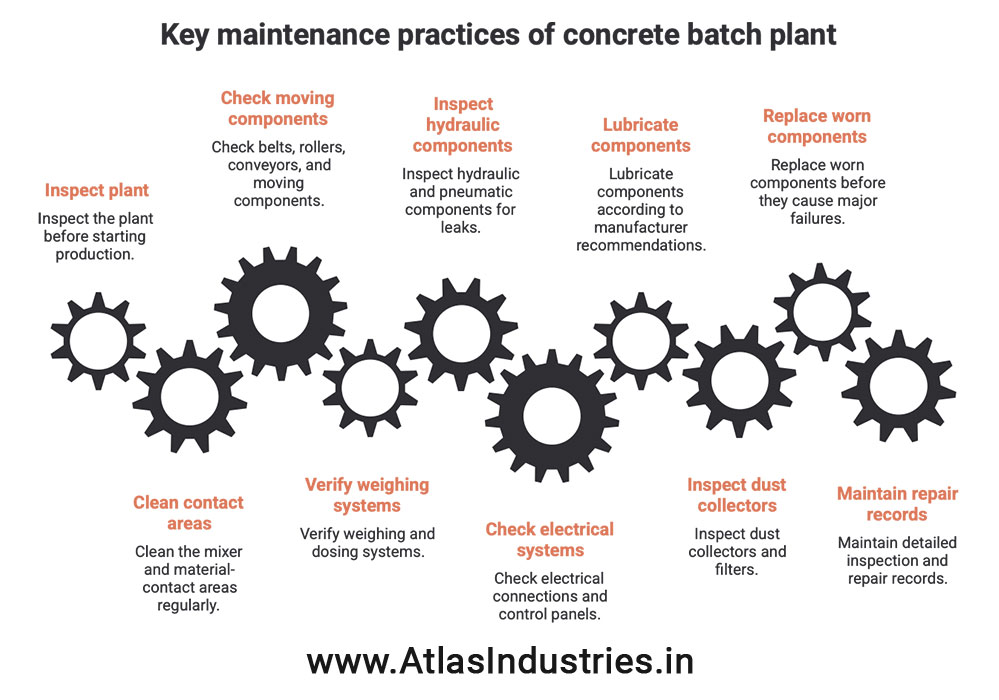
Key maintenance practices include:
- Inspect the plant before starting production.
- Clean the mixer and material-contact areas regularly.
- Check belts, rollers, conveyors, and moving components.
- Verify weighing and dosing systems.
- Inspect hydraulic and pneumatic components for leaks.
- Check electrical connections and control panels.
- Lubricate components according to manufacturer recommendations.
- Inspect dust collectors and filters.
- Replace worn components before they cause major failures.
- Maintain detailed inspection and repair records.
A preventive maintenance program can help identify small problems before they develop into costly equipment failures.
Why Is Concrete Batching Plant Maintenance Important?
A batching plant operates through multiple interconnected systems. If one component performs poorly, it can affect the entire production process. For example, inaccurate weighing equipment can affect mix proportions, while a poorly maintained mixer can create inconsistent mixing performance. Conveyor problems can interrupt material flow, and electrical or control-system faults can result in production downtime.
Regular maintenance can help improve:
- Production reliability
- Equipment availability
- Concrete consistency
- Operational efficiency
- Component lifespan
- Workplace safety
- Maintenance planning
- Overall operating costs
For plant owners, preventive maintenance is generally more manageable than waiting for a major breakdown that interrupts construction schedules.
Create a Daily Concrete Batching Plant Inspection Routine
Daily inspections are one of the simplest ways to identify developing problems. Before production begins, operators should visually inspect important areas of the plant. Look for unusual wear, loose components, material buildup, leaks, damaged cables, abnormal sounds, and other visible issues.
The daily inspection can include:
- Mixer condition
- Conveyor belts
- Aggregate bins
- Cement and powder storage systems
- Weighing equipment
- Water dosing system
- Admixture dosing equipment
- Electrical panels
- Hydraulic components
- Safety devices
Operators should record unusual observations and report issues according to the plant’s maintenance procedure.
Clean the Mixer and Prevent Material Buildup
The mixer is one of the most important components of a batching plant. Hardened concrete or accumulated material can affect mixing performance and place additional stress on components. Regular cleaning helps prevent excessive buildup around mixer blades, walls, discharge areas, and other material-contact surfaces.
Cleaning frequency should depend on production volume, concrete mix characteristics, operating conditions, and the equipment manufacturer’s recommendations. Operators should follow appropriate safety procedures before cleaning or entering any equipment. Moving machinery must be isolated according to the site’s established lockout and safety procedures.
Inspect Conveyor Belts and Aggregate Handling Systems
Aggregate handling systems continuously transport materials, making conveyors vulnerable to wear and misalignment.
Regularly inspect:
- Belt condition
- Rollers
- Pulleys
- Bearings
- Belt alignment
- Tension
- Scrapers
- Transfer points
- Guards
Material buildup around transfer points can affect belt movement and increase wear. Damaged or excessively worn components should be addressed before they create a larger operational problem. Companies comparing equipment from concrete batch mix plant manufacturers should also consider how easily conveyor components can be accessed for inspection and replacement.
Check Weighing and Dosing Accuracy
Accurate weighing is essential for producing consistent concrete. Aggregate, cement, water, and admixtures must be measured according to the selected mix design.
Routine checks should include:
- Load cells
- Weigh hoppers
- Cement weighing systems
- Water meters or weighing systems
- Admixture dosing equipment
- Calibration status
- Material discharge gates
If measurements appear inconsistent, the system should be investigated and calibrated according to the manufacturer’s procedures and applicable quality-control requirements. A reliable weighing system can help minimize material waste while supporting consistent batching performance.
Maintain Cement Storage and Feeding Systems
Cement and other powdered materials can create buildup and blockages if storage and feeding equipment are not properly maintained. Inspect silos, screw conveyors, filters, valves, pressure-relief components, and other associated equipment according to the manufacturer’s maintenance instructions. Pay particular attention to abnormal vibration, restricted material flow, dust leakage, and unusual sounds. Proper inspection can help identify problems before they interrupt cement feeding and production.
Inspect Electrical, Hydraulic and Pneumatic Systems
Modern batching plants depend on electrical controls, sensors, hydraulic systems, and pneumatic components.
Electrical maintenance may include checking:
- Control panels
- Sensors
- Wiring and connections
- Emergency-stop systems
- Motors
- Switchgear
- Automation components
Hydraulic and pneumatic systems should be checked for leaks, damaged hoses, pressure abnormalities, and worn components. Electrical work and other specialist maintenance should be performed by appropriately qualified personnel following the equipment manufacturer’s instructions and site safety requirements.
Keep Dust-Control Systems in Good Condition
Dust management is another important part of batching plant maintenance. Cement and other fine materials can accumulate around equipment and affect the operating environment. Depending on the plant configuration, maintenance may involve inspecting dust collectors, filters, vents, seals, and related systems. A blocked or damaged filter can reduce dust-control performance and may affect equipment operation. Follow the specific cleaning, inspection, and replacement intervals provided for the installed system.
Lubricate Moving Components Regularly
Lubrication helps reduce friction and wear in components such as bearings, shafts, gears, and other moving parts. However, more lubrication is not necessarily better. Excessive or incorrect lubrication can create its own problems. Use the lubricant type, quantity, and service interval specified by the equipment manufacturer. Keep a lubrication schedule so maintenance personnel know which components have been serviced and when the next service is due. This simple record-keeping practice can prevent important lubrication tasks from being overlooked.
Replace Worn Components Before Failure
Waiting until a component completely fails can result in unexpected downtime and potentially damage connected equipment.
Monitor components for signs such as:
- Excessive vibration
- Unusual noise
- Cracks
- Corrosion
- Deformation
- Excessive wear
- Reduced performance
- Repeated faults
Maintain an inventory of commonly required wear parts and critical replacement components where appropriate. This can reduce delays when maintenance becomes necessary. When selecting equipment, ready-mix concrete plant manufacturers and other established suppliers may provide information about recommended replacement parts and maintenance intervals.
Follow a Preventive Maintenance Schedule
A structured maintenance schedule should divide tasks into daily, weekly, monthly, and periodic inspections.
| Maintenance Frequency | Typical Tasks |
| Daily | Visual inspection, mixer cleaning, leaks and safety checks |
| Weekly | Conveyor inspection, lubrication and component checks |
| Monthly | Electrical, hydraulic and pneumatic inspection |
| Periodic | Calibration, detailed component inspection and servicing |
| As required | Wear-part replacement and corrective repairs |
The exact schedule should always be adapted to the plant design, production intensity, operating environment, and manufacturer’s recommendations.
Maintain Detailed Maintenance Records
Maintenance records help operators identify recurring issues and plan future servicing.
Record details such as:
- Inspection date
- Equipment component
- Problem identified
- Corrective action
- Replacement parts
- Technician or operator
- Next scheduled inspection
Over time, these records can reveal recurring failures and help maintenance teams make better decisions about component replacement, upgrades, and servicing. For organizations purchasing or upgrading equipment, concrete mixing plant manufacturers can also be evaluated based on their technical documentation, spare-parts support, service availability, and maintenance guidance.
Choose Equipment With Long-Term Maintenance in Mind
Maintenance begins before the plant is installed. When comparing suppliers, consider more than production capacity and initial purchase price.
Important factors include:
- Equipment build quality
- Component accessibility
- Automation system reliability
- Spare-parts availability
- Technical support
- Service network
- Maintenance documentation
- Safety features
- Customization options
A supplier’s ability to provide ongoing technical support can be particularly important for businesses operating plants continuously. When evaluating a concrete batching plant manufacturer and supplier, ask about recommended preventive maintenance schedules, critical spare parts, after-sales service, and operator training. Atlas Industries provides concrete batching and related construction equipment solutions, and buyers can consider maintenance requirements alongside plant capacity and configuration when evaluating equipment.
Final Thoughts
Consistent maintenance is essential for keeping a concrete batching plant productive, reliable, and safe. Daily inspections, regular cleaning, accurate weighing-system checks, conveyor maintenance, lubrication, electrical inspections, and timely replacement of worn components can help reduce unexpected downtime and extend equipment life. Maintenance should also be considered when purchasing a new plant.
Comparing concrete batching plant manufacturers, concrete batch mix plant manufacturers, concrete batching plant company options, and suppliers based on service support, spare parts availability, documentation, and equipment design can support better long-term planning. A preventive approach is ultimately about identifying problems early rather than waiting for equipment failure. By combining a structured maintenance schedule with accurate records and manufacturer-recommended servicing, plant operators can keep production running efficiently and protect their investment over the long term.
FAQs
Q1. How often should a concrete batching plant be maintained?
A1. Basic inspections and cleaning should generally be performed regularly, often daily, while other components require weekly, monthly, or periodic servicing. The exact schedule depends on the plant design and manufacturer’s recommendations.
Q2. What should be checked daily on a batching plant?
A2. Operators can check the mixer, conveyors, material flow, weighing systems, electrical components, hydraulic or pneumatic systems, leaks, unusual sounds, visible wear, and safety devices.
Q3. Why is mixer cleaning important?
A3. Regular mixer cleaning helps prevent hardened concrete buildup that can affect mixing performance and contribute to component wear.
Q4. How can batching accuracy be maintained?
A4. Regular inspection and calibration of weighing and dosing systems according to the equipment manufacturer’s procedures can help maintain accurate material measurement.
Q5. What are common signs of batching plant equipment wear?
A5. Unusual noise, vibration, cracks, corrosion, material leakage, misalignment, reduced performance, and repeated equipment faults can indicate developing problems.
Q6. Should batching plant maintenance records be maintained?
A6. Yes. Detailed records can help track inspections, repairs, replacement parts, recurring problems, and upcoming maintenance requirements.
Q7. How do I choose between concrete batching plant manufacturers?
A7. Compare equipment design, production capacity, component quality, automation, spare-parts availability, technical support, maintenance requirements, and after-sales service.
Q8. What is the role of concrete batching plant manufacturers in maintenance?
A8. Manufacturers can provide equipment-specific maintenance instructions, recommended service intervals, component information, technical documentation, and support for their systems.
