
A well-maintained concrete batching plant can support consistent production, reduce unexpected downtime and help construction companies manage operating costs. For companies using equipment across different project sites, maintenance becomes especially important because transportation, setup and changing site conditions can place additional demands on the equipment.
A structured Portable Concrete Plant Maintenance program helps construction teams identify wear, clean critical components, inspect safety systems and address small issues before they become larger operational problems. Whether a company operates a portable concrete batch plant, maintenance should be planned around manufacturer recommendations, operating conditions and equipment usage.
The following checklist provides a practical framework for routine inspections and maintenance planning.
What Should a Portable Concrete Plant Maintenance Checklist Include?
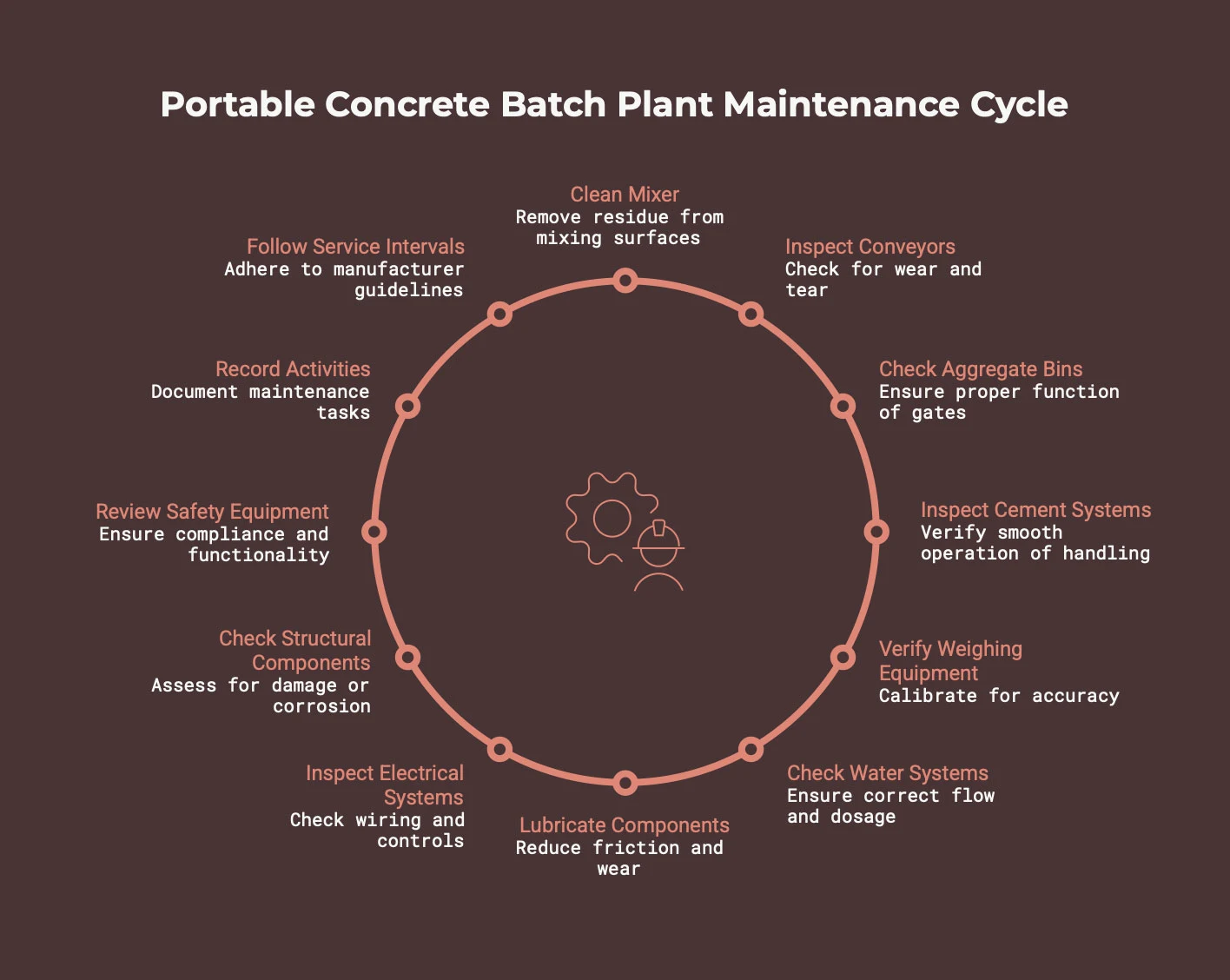
A Portable Concrete Plant Maintenance Checklist should cover daily cleaning and inspections, mixer and conveyor checks, aggregate and cement handling systems, weighing equipment, electrical components, lubrication, safety systems and periodic preventive maintenance.
Key maintenance areas include:
- Cleaning the mixer and material-contact areas
- Inspecting conveyors and moving components
- Checking aggregate bins and gates
- Inspecting cement and powder handling systems
- Verifying weighing equipment
- Checking water and additive systems
- Lubricating specified components
- Inspecting electrical and control systems
- Checking structural components
- Reviewing safety equipment
- Recording maintenance activities
- Following manufacturer-recommended service intervals
The exact maintenance schedule should always follow the equipment manufacturer’s instructions and the conditions in which the plant operates.
Why Portable Concrete Plant Maintenance Matters
Construction projects often depend on predictable concrete production schedules. Unexpected plant downtime can affect concrete availability and potentially disrupt other project activities.
Regular maintenance can help companies:
- Identify worn components early
- Reduce unexpected breakdowns
- Maintain production consistency
- Extend equipment service life
- Improve operational efficiency
- Support safer working conditions
- Plan spare-parts requirements
- Control maintenance costs
For portable equipment, maintenance should also account for relocation between sites. Components can be affected by transportation, repeated assembly and different environmental conditions.
Daily Portable Concrete Plant Maintenance Checklist
Daily inspections should be simple enough for operators to complete consistently.
1. Clean the Mixer
Concrete buildup inside and around the mixer can affect operation and make future cleaning more difficult. Follow the manufacturer’s cleaning procedures and ensure the mixer is safely isolated before maintenance work.
2. Inspect Material Contact Areas
Check areas where concrete or raw materials accumulate. Look for excessive buildup, damaged liners or unusual wear.
3. Check Conveyors
Inspect conveyor belts, rollers and related components for visible damage, misalignment or excessive wear.
4. Inspect Aggregate Gates
Check gates and discharge points for material buildup or obstruction.
5. Check for Leaks
Inspect hydraulic, water, lubrication and other applicable systems for visible leaks.
6. Review the Control Panel
Check for unusual warnings, alarms or indications before production begins.
Weekly Maintenance Checklist
Weekly maintenance should provide a more detailed review of mechanical and material-handling components.
Mixer Inspection
Inspect mixer components and wear areas according to the manufacturer’s maintenance instructions.
Conveyor Inspection
Check belt condition, alignment and tension where applicable. Inspect rollers and other moving components.
Lubrication
Lubricate specified components according to the manufacturer’s recommended schedule and lubricant specifications.
Aggregate System
Inspect bins, gates and material-flow components for buildup or mechanical problems.
Structural Inspection
Look for loose fasteners, visible cracks, corrosion or other structural concerns.
Monthly Maintenance Checklist
A monthly inspection can provide a deeper review of the plant’s operating systems.
Check Weighing Equipment
Accurate material measurement is important for consistent batching. Inspect load cells, weighing components and related connections for damage or unusual conditions.
Inspect Electrical Components
Check electrical connections, control cabinets and other accessible components according to qualified maintenance procedures.
Review Water and Additive Systems
Inspect pumps, pipes, valves and dosing components for leaks, blockages or abnormal operation.
Check Cement Handling Equipment
Inspect screw conveyors, filters and other applicable powder-handling components according to manufacturer guidance.
Portable Concrete Plant Maintenance During Relocation
One advantage of a portable concrete plant is that it can be moved between project locations. However, relocation introduces additional maintenance considerations.
Before transportation:
- Secure components according to manufacturer instructions
- Inspect transport-related connections
- Protect sensitive electrical components
- Check structural connections
- Document the plant’s condition
After relocation:
- Inspect components for transportation-related damage
- Check connections
- Verify alignment where applicable
- Inspect cables and hoses
- Confirm that safety systems are functioning
- Complete required commissioning checks before production
Never operate equipment after relocation until required inspections and setup procedures have been completed.
Maintenance for a Portable Concrete Batch Plant
A portable concrete batch plant combines multiple systems that need to operate together. Maintenance should therefore cover the complete plant rather than focusing only on the mixer.
Important systems include:
- Aggregate storage and feeding
- Cement storage and handling
- Water systems
- Additive systems
- Weighing equipment
- Mixer
- Conveyor systems
- Control systems
- Electrical components
Keeping records for each system makes it easier to identify recurring issues.
Small Portable Concrete Batch Plant Maintenance
A small portable concrete batch plant may have a smaller production capacity, but it still requires systematic maintenance. Smaller equipment can sometimes be exposed to frequent transportation or use on compact construction sites. Operators should therefore pay attention to:
- Transportation-related wear
- Material buildup
- Conveyor components
- Mixer wear
- Electrical connections
- Structural fasteners
- Lubrication points
The plant’s size does not eliminate the need for preventive maintenance.
Stationary vs Portable Plant Maintenance Considerations
A stationary concrete batching plant generally remains at one location, while portable equipment may be relocated between projects.
This creates some differences in maintenance planning.
| Maintenance Area | Portable Plant | Stationary Plant |
| Transportation checks | Important | Usually less frequent |
| Relocation inspections | Required when moved | Generally not applicable |
| Setup checks | Required after relocation | Mainly during installation/changes |
| Structural inspection | Important | Important |
| Cleaning | Regular | Regular |
| Lubrication | Manufacturer schedule | Manufacturer schedule |
| Electrical inspection | Regular | Regular |
Both plant types require preventive maintenance, but portable equipment needs additional attention around transportation and relocation.
Concrete Portable Batch Plant Safety Checks
A concrete portable batch plant should not be maintained while moving machinery is operating.
Before maintenance:
- Follow lockout/tagout procedures where applicable
- Isolate relevant energy sources
- Allow moving components to stop
- Follow manufacturer safety instructions
- Use appropriate personal protective equipment
- Restrict unauthorized access
- Ensure qualified personnel perform specialized electrical or mechanical work
Safety procedures should always take priority over production schedules.
Keep a Maintenance Record
A maintenance log can help construction companies identify patterns and plan future servicing.
Record:
- Inspection date
- Equipment hours
- Components inspected
- Maintenance performed
- Parts replaced
- Problems identified
- Technician or operator
- Next scheduled maintenance
Digital maintenance records can make it easier to monitor recurring problems across multiple project sites.
Spare Parts Planning
Keeping appropriate spare parts available can reduce downtime when common wear components need replacement. Depending on the equipment, businesses may consider maintaining suitable stocks of:
- Belts
- Bearings
- Seals
- Lubricants
- Electrical fuses
- Wear components
- Filters
- Other manufacturer-recommended consumables
Spare parts should be selected according to the actual equipment model and manufacturer specifications.
Portable Concrete Plant Maintenance Checklist
How to Create an Effective Maintenance Schedule
An effective schedule should combine:
Daily Checks
Operator inspections, cleaning and visual checks.
Weekly Checks
Mechanical inspections, lubrication and component reviews.
Monthly Checks
Detailed inspection of weighing, electrical, material-handling and structural systems.
Periodic Servicing
Follow manufacturer-recommended service intervals for major components.
Relocation Checks
Complete additional inspections whenever the plant is transported to a new project site. Atlas Industries provides concrete batching and construction equipment solutions, with equipment maintenance requirements that should be managed according to the specific plant configuration and manufacturer guidance.
Final Thoughts
A structured maintenance program can help construction companies operate batching equipment more reliably and identify potential problems before they develop into major disruptions. The Portable Concrete Plant Maintenance Checklist should cover daily inspections, periodic servicing, cleaning, lubrication, material-handling systems, weighing equipment, electrical components and safety procedures. Portable equipment also requires additional checks before and after transportation.
Whether you operate a portable concrete plant, small portable concrete batch plant or another configuration, maintenance should always follow the manufacturer’s instructions and the specific requirements of the equipment. By maintaining accurate records, planning spare parts and completing routine inspections, construction companies can build a more organized preventive maintenance program. Atlas Industries supports construction equipment applications where proper maintenance and equipment-specific service planning are important for reliable plant operation.
Frequently Asked Questions
Q1. What should a Portable Concrete Plant Maintenance Checklist include?
A1. It should cover cleaning, mechanical inspections, conveyors, mixer components, weighing systems, electrical systems, lubrication, safety checks and periodic servicing.
Q2. How often should a portable concrete plant be maintained?
A2. Maintenance frequency depends on equipment design, operating hours, site conditions and manufacturer recommendations. Daily inspections should generally be combined with periodic preventive maintenance.
Q3. Does a portable concrete batch plant need special maintenance after relocation?
A3. Yes. Transportation and reinstallation can introduce additional inspection requirements. Follow the manufacturer’s relocation and commissioning procedures.
Q4. What should I check on a small portable concrete batch plant?
A4. Check the mixer, conveyors, aggregate system, electrical connections, structural components, lubrication points and other equipment-specific systems.
Q5. How is maintenance different for a stationary concrete batching plant?
A5. A stationary plant generally does not require repeated transportation and relocation checks, but its mechanical, electrical, material-handling and safety systems still require regular maintenance.
Q6. What is important for concrete portable batch plant maintenance?
A6. Cleaning, inspection, lubrication, component wear monitoring, electrical checks and proper maintenance records are important areas.
Q7. Why keep a concrete plant maintenance record?
A7. Records help track inspections, repairs, component replacements and upcoming maintenance, making preventive maintenance easier to manage.
